The Evolution of Men’s Fashion Through the Decades
Who knew men’s clothing could tell so many stories? Men’s fashion, far from being a simple catalog of trends, has transformed over the decades, faithfully reflecting the social, cultural, and economic upheavals of our societies. Each era has left its distinctive mark, between bold innovations, radical ruptures, and nostalgic returns to the roots. This journey through time sheds light on how men’s style was constructed, deconstructed, and then reinvented, shaping the identity of men of yesterday and today. From the rigid and impeccable suits of the fifties to the hybrid and fluid outfits of our contemporary era, let’s embark on this fascinating stylistic journey.
The 1950s: The era of the suit and classic elegance
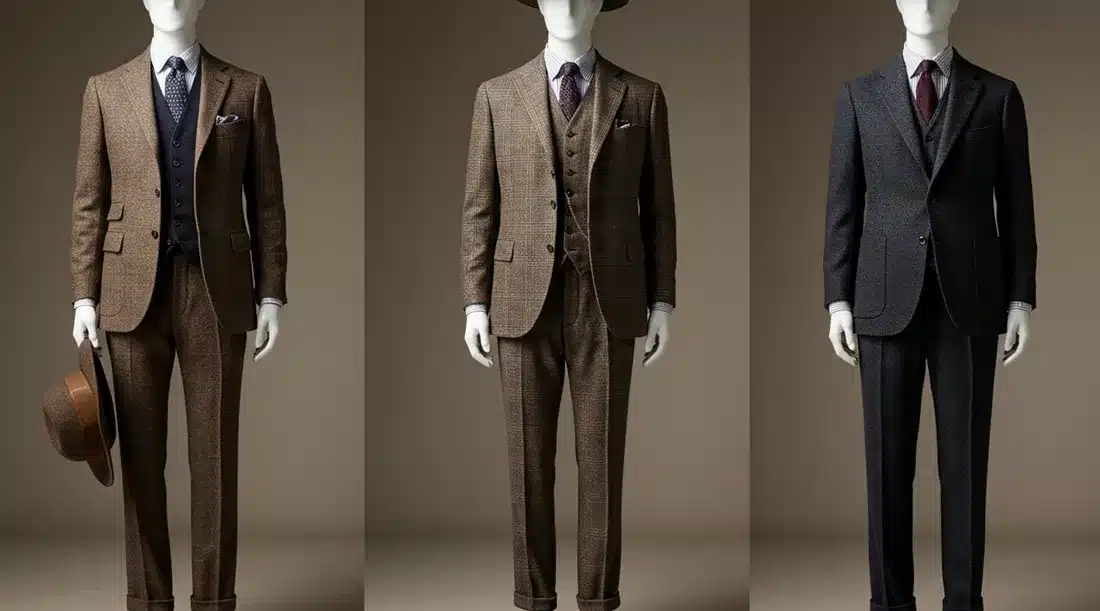
The fifties embodied the golden age of the business suit, a true symbol of social success. After the deprivations of war, men enthusiastically rediscovered the pleasures of elegance and sartorial refinement. The three-piece suit reigned supreme, featuring structured shoulders and a V-shaped silhouette that unashamedly celebrated traditional masculinity. The color palette remained discreet—gray, navy blue, black—reflecting the prevailing conformity.
The big screen then played a decisive role in spreading trends. Iconic figures like Cary Grant and James Dean became the absolute benchmarks in terms of style. The latter, with his iconic leather jacket and raw denim, embodied a rebellious masculinity that slowly began to break the conventional mold of the era.
Please note : It was also during this period that the men’s polo t-shirt gradually established itself as a casual alternative to the suit, thanks in particular to the influence of personalities like René Lacoste who popularized this piece straight from the sports fields. The polo shirt then offered this perfect compromise between the formality of the shirt and the casualness of the t-shirt, allowing men to maintain a certain elegance while freeing themselves from overly rigid codes.
The 1960s: The Cultural and Clothing Revolution
The sixties unceremoniously shook up male dress conventions. Youth loudly asserted themselves and claimed their own identity through their clothing. The Beatles, sporting more tailored suits and longer hair, embodied this new vision of masculinity. Colors became bolder, and psychedelic patterns invaded wardrobes.
The hippie movement deeply influenced men’s clothing with its floral shirts, fringed jackets, and flared pants. For the first time in modern history, men were unashamedly appropriating items previously considered the preserve of women.
Jeans, once confined to the working class, became the standard-bearer of a generation that rejected class distinctions. They established themselves as the universal garment par excellence, spanning all strata of society.
The 1970s: The Explosion of Styles
The seventies continued and amplified the trends that had begun in the previous decade. Disco fever had a massive influence on men’s fashion: brightly colored polyester suits, shirts with “pie-slice” collars casually open at the torso, and bell-bottom trousers reigned supreme. The masculine silhouette further freed itself from traditional codes.
Synthetic materials are having their moment in the spotlight: polyester, acrylic, and nylon are invading wardrobes. Velvet and satin, once reserved for formal events, are now making their way into everyday wear. Platform shoes enhance masculine stature, further blurring gender lines.
This period also marked the emergence of politically engaged fashion. Clothing became veritable manifestos, openly displaying affiliation with a particular cultural or political movement.
The 1980s: Excess and Power Dressing
The 1980s ushered in the era of “power dressing.” The suit made a comeback, but in an oversized version: exaggeratedly broad shoulders, straight cuts, and oversized ties. This imposing silhouette symbolized success and ambition in an economic climate marked by fierce competition.
Tip : The men’s polo shirt experienced a spectacular revival during this decade, becoming the essential emblem of the preppy style popularized by brands like Ralph Lauren. Worn with the collar raised, often layered over other pieces, it symbolized belonging to an elitist and sporty youth, while offering a relaxed alternative to the suit for moments of leisure.
The influence of sportswear is growing considerably with the fitness craze and the cult of the body. Tracksuits, basketball shorts, and sneakers are escaping the gym and conquering the streets. The lines between sportswear and everyday wear are seriously beginning to blur.
The 1990s: Minimalism and Grunge
In response to the flashy excesses of the 1980s, the 1990s marked a welcome return to a certain sobriety. Silhouettes became considerably more streamlined, and colors became more discreet. Suits became slimmer, and shoulders returned to more natural proportions. Visionary designers like Helmut Lang and Calvin Klein imposed a minimalist aesthetic that would have a lasting impact on the world of men’s fashion.
At the same time, hip-hop culture revolutionized men’s wardrobes with its ultra-baggy jeans, oversized T-shirts, and ubiquitous caps. Sportswear brands became true status symbols.
The grunge movement, spearheaded by iconic bands like Nirvana, offered a radically anti-fashion alternative: casually worn plaid shirts, ripped jeans, hats, and sweaters with holes in them. This deliberate “I-don’t-give-a-s***” aesthetic was a scathing critique of the rampant consumerism of previous decades.
The 2000s: The Mix of Genres
The 2000s were characterized by unprecedented eclecticism. The barriers between formal and casual styles gradually blurred. The concept of “casual Friday,” initially limited to the last day of the workweek, gradually extended to the entire week, profoundly transforming professional dress codes.
Streetwear is gaining ground and influencing even the biggest haute couture houses. Collaborations between luxury brands and urban labels are multiplying, definitively blurring traditional distinctions.
Personalization is becoming a central issue. Modern men now seek to express their individuality through their clothing, categorically rejecting standardizing dictates. Men’s fashion is becoming more experimental, daring to borrow boldly from the feminine wardrobe.
The 2010s to Today: The Age of Digital and Sustainability
The advent of social media is radically disrupting the way trends are disseminated. Instagram, Pinterest, and more recently, TikTok have emerged as major sources of inspiration, dramatically accelerating fashion cycles and democratizing access to the latest global trends. This period is distinguished by several notable characteristics:
- Hyper-personalization of styles, facilitated by instant access to global references
- The rise of ethical concerns profoundly influencing purchasing choices
- The triumphant return of vintage and second-hand, now prized rather than simply tolerated
- The gradual but certain erasure of gender distinctions in the world of fashion
Environmental issues are now central. Consumers, better informed than ever, demand transparency and accountability from brands. Sustainability is no longer seen as a mere marketing option but as an imperative.
The timelessness of certain pieces
Despite these constant evolutions, certain pieces of men’s clothing have survived the ages with remarkable consistency. The suit, although constantly reinvented in its proportions and uses, remains a staple. Jeans, initially a simple workwear and later a symbol of youthful rebellion, are now universally adopted by all generations.
The men’s polo shirt is one of those rare pieces that has reinvented itself over the decades without ever losing its fundamental essence. Born on the tennis courts, adopted by elite athletes, and then widely popularized, it perfectly embodies this ability to adapt while preserving its original identity. Its natural versatility allows it to blend seamlessly into both a casual professional environment and leisure wear.